You Called Me SAVAGE
THE MYTH AND THE REALITY
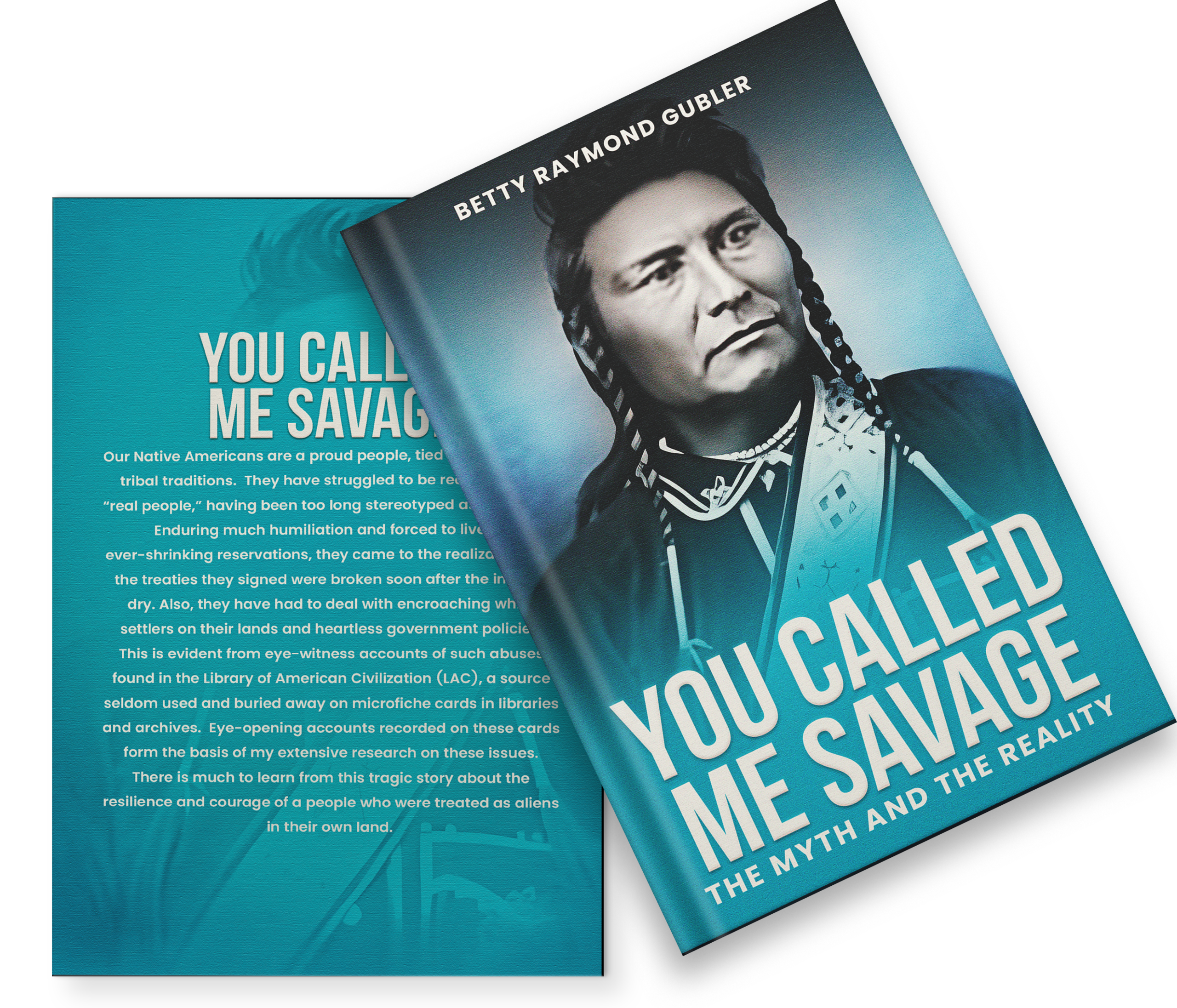
Our Native Americans are a proud people, tied to the land and tribal traditions. They have struggled to be recognized as “real people,” having been too long stereotyped as “savages.”


Betty
Raymond Gubler
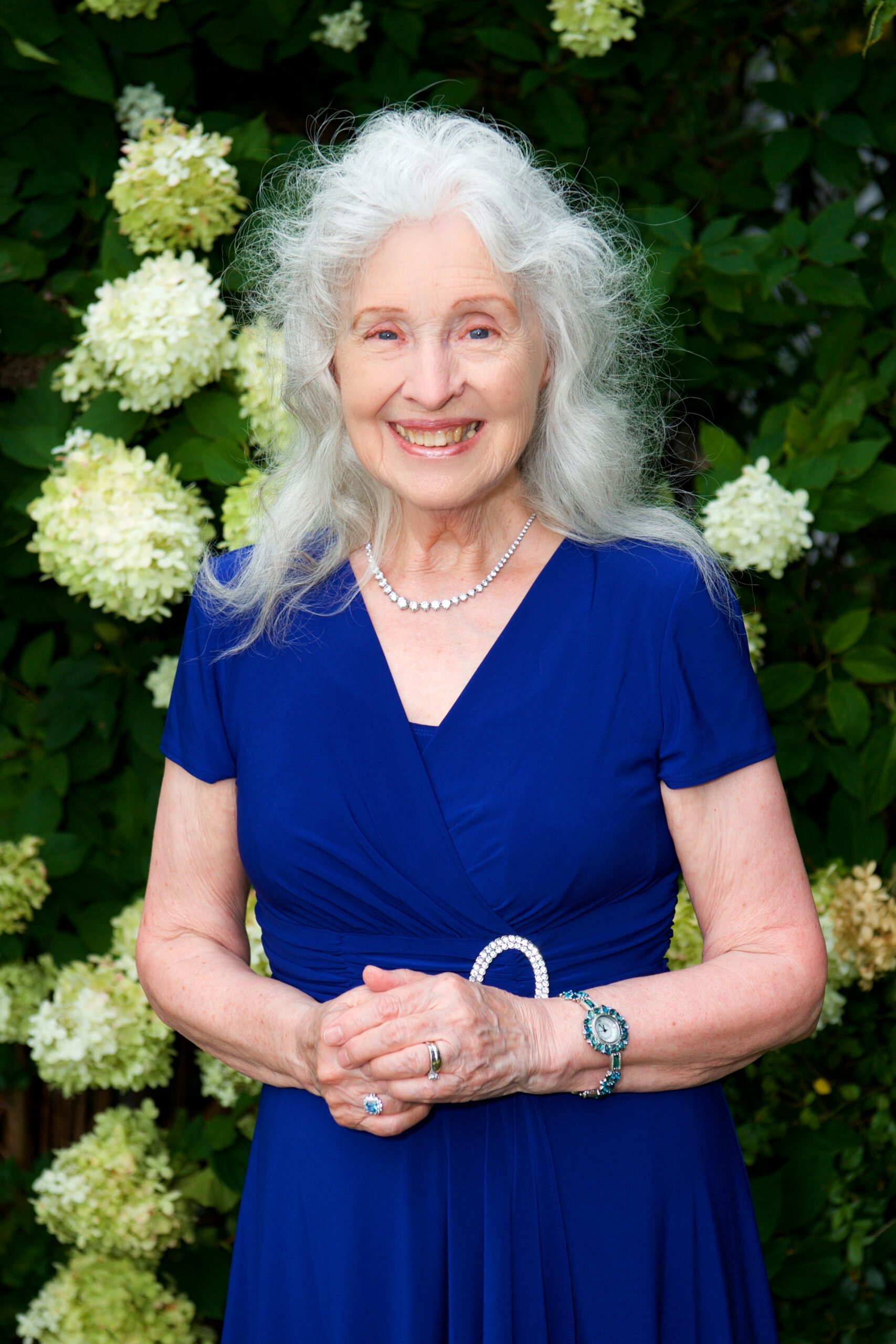
Betty Raymond Gubler graduated from GSTC in Gorham, Maine (now called the University of Southern Maine). She then worked on a master’s degree in English at BYU in Provo, Utah, where she was also a graduate assistant in the English Department. Then she taught English classes at Nanyang University the year her husband Greg was a Fulbright scholar in Singapore, and later taught English classes at Utah Tech. For 23 years, Betty taught English classes at BYU-Hawaii at which time Horizon Press published her book, Valentines in the Snow.
With Christian Faith Publishers, she has also published six books: Stars of Big Sky, a romance novel featuring three Native American singers; More Than the Eye Can See, a romance novel revealing the joys & sorrows of married life; The People of the First Light, a historical fiction dealing with the treatment of the Maine Native Americans by the early French & English settlers; Let Them Eat Grass, a historical novel dealing with the tragedies faced by the Sioux Indians; Adam Learns to Whistle, a collection of thirty short stories for children & grown-ups; & God’s “Good Morning,” which is Betty’s story of her spiritual journey raising a special needs child, her firstborn autistic son, & how this test proved to be a great blessing to her as she went through the process of shock & grief to an understanding that God had sent to Betty & her husband
About
The Author
Greg, not a lesser blessing, but a greater blessing, by allowing them to be the parents of a special needs child, truly a valiant celestial spirit. Betty’s book, You Called Me Savage, is a well-researched history of how the whites treated the Native Americans, the ruthlessness, dishonesty, broken treaties, and shrinking, seemingly worthless reservations where they now are, among the different nationalities of people now living in America, the most poverty-stricken. It is Betty’s intention to be a voice for them and to have the schools’ history books relate the truth of our country’s early beginnings instead of whitewashing it by making themselves the heroes and the Native Americans as the savages. The truth is found in the research of the early records.
About the Book
You Called
Me SAVAGE
THE MYTH AND THE REALITY
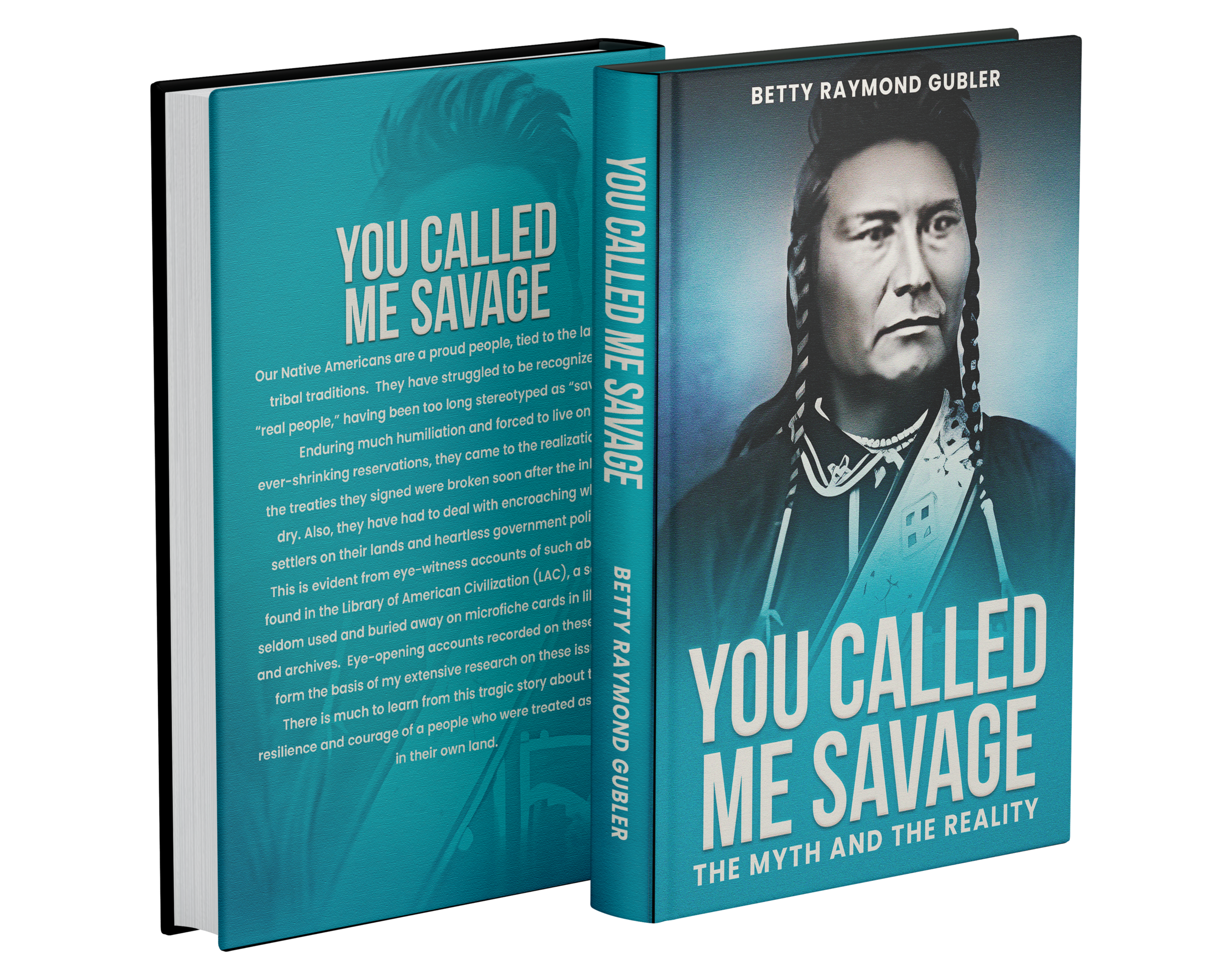
Our Native Americans are a proud people, tied to the land and tribal traditions. They have struggled to be recognized as “real people,” having been too long stereotyped as “savages.” Enduring much humiliation and forced to live on ever-shrinking reservations, they came to the realization that the treaties they signed were broken soon after the ink was dry. Also, they have had to deal with encroaching white settlers on their lands and heartless government policies. This is evident from eye-witness accounts of such abuses found in the Library of American Civilization (LAC)
A source seldom used and buried away on microfiche cards in libraries and archives. Eye-opening accounts recorded on these cards form the basis of my extensive research on these issues. There is much to learn from this tragic story about the resilience and courage of a people who were treated as aliens in their own land. BETTY RAYMOND


Watch
Video Book Trailer
Reader Testimonials
Words from the Heart
blogs
We Have
Blog Title Here
When an unknown printer took a galley of type & scrambled it to make a type specimen book. It has survived not only five centuries, but also the leap into electronic typesetting, remaining essentially unchanged.
Blog Title Here
When an unknown printer took a galley of type & scrambled it to make a type specimen book. It has survived not only five centuries, but also the leap into electronic typesetting, remaining essentially unchanged.
Blog Title Here
When an unknown printer took a galley of type & scrambled it to make a type specimen book. It has survived not only five centuries, but also the leap into electronic typesetting, remaining essentially unchanged.
Subscribe Our Newsletter
injected humour, or non-characteristic words etc.
Stay Connected